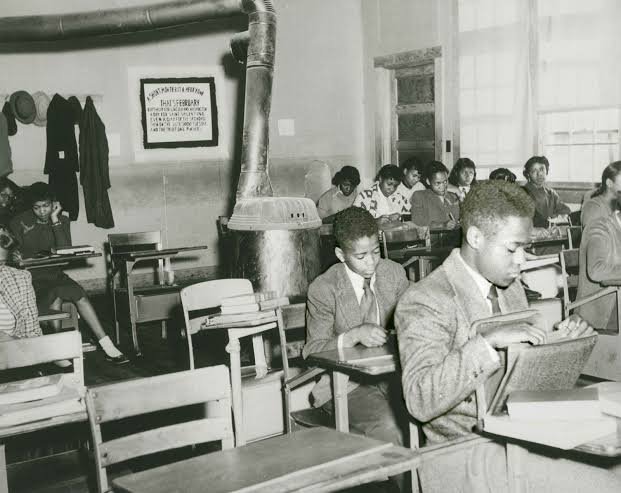
Brown v. Board of Education is one of the most important decisions in United States Supreme Court history. Decided on May 17, 1954, the case ruled that racial segregation in public schools was unconstitutional under the Equal Protection Clause of the Fourteenth Amendment. The decision rejected the idea that racially segregated public schools could be considered equal simply because they provided similar facilities.
The case challenged laws and practices that separated Black and white students into different public schools. These policies were part of a broader system of racial segregation that affected education, transportation, housing, and other areas of American life.
The Supreme Court’s unanimous decision marked a major turning point in the civil rights movement. It established that racial segregation in public education violated the Constitution and helped create the legal foundation for further challenges to segregation.
Understanding Brown v. Board of Education means looking at the history of school segregation, the families who challenged it, the Court’s legal reasoning, and the long-term effects of the ruling on American education.
What Does Brown v. Board of Education Mean?
Brown v. Board of Education refers to a group of related legal challenges to racial segregation in public schools that the Supreme Court considered together. The best-known case involved Oliver Brown and other families who challenged the segregation of public schools in Topeka, Kansas.
The families argued that separating children by race denied Black students equal protection under the law. The Supreme Court agreed, concluding that segregation in public education was inherently unequal.
The decision directly addressed public education, rather than immediately ending every form of racial segregation across the country. However, it became an important precedent for civil rights litigation and later efforts to dismantle legally enforced segregation.
Background: School Segregation Before Brown
Before the Brown decision, racial segregation was legally required or permitted in many parts of the United States. In numerous Southern states, laws mandated separate schools for Black and white students. Other areas maintained segregation through local policies and established practices.
These systems often provided unequal resources, facilities, transportation, and educational opportunities to Black students. Even where officials claimed that separate schools were equal, the separation itself imposed social and educational disadvantages.
The Plessy v. Ferguson Decision
In 1896, the Supreme Court decided Plessy v. Ferguson, a case involving racial segregation on railroad cars. The Court upheld the challenged Louisiana law and became associated with the doctrine known as “separate but equal.”
Although Plessy concerned public transportation, the doctrine was later used to justify racial segregation in various public institutions, including schools.
Civil rights advocates challenged the application of this doctrine over time. By the middle of the twentieth century, legal organizations and families were bringing cases to demonstrate that segregated schools violated constitutional protections.
The Role of the NAACP
The National Association for the Advancement of Colored People (NAACP) and its legal defense efforts played a central role in challenging school segregation.
Lawyers and civil rights advocates pursued legal strategies aimed at dismantling discriminatory education policies. Thurgood Marshall, who later became the first Black justice of the United States Supreme Court, was a leading attorney in the litigation.
The legal campaign involved multiple communities and families who sought equal educational opportunities for their children. Their efforts helped bring the constitutional question of school segregation before the nation’s highest court.
What Happened in Brown v. Board of Education?
The case originated in Topeka, Kansas, where Black children were required to attend segregated schools under the local system. Oliver Brown joined other parents in challenging the school district’s arrangements after their children faced barriers to attending nearby schools reserved for white students.
The litigation was part of a wider set of cases challenging school segregation in different states. These cases included disputes involving schools in South Carolina, Virginia, Delaware, and the District of Columbia. The Supreme Court considered several of them together because they raised related questions about racial separation in public education.
The central legal issue was whether segregating children in public schools solely on the basis of race violated the Equal Protection Clause of the Fourteenth Amendment.
The families argued that segregation harmed Black children and denied them equal educational treatment. School authorities defended their systems under existing laws and precedents that had permitted racial separation.
The Supreme Court ultimately ruled in favor of the families challenging public school segregation.
The Supreme Court’s Decision in 1954
On May 17, 1954, the Supreme Court announced its unanimous decision in Brown v. Board of Education. Chief Justice Earl Warren wrote the opinion for the Court.
The justices concluded that racial segregation in public schools violated the Equal Protection Clause of the Fourteenth Amendment. The Court held that separate educational facilities were inherently unequal, even when tangible factors such as buildings and equipment appeared comparable.
The ruling rejected the application of the “separate but equal” doctrine to public education. It recognized that separating children solely on the basis of race denied Black students equal educational opportunities.
The decision was significant because it established a constitutional principle that challenged legally enforced school segregation throughout the country. It also provided a foundation for subsequent court cases and civil rights efforts seeking equal treatment under the law. <Cite refs={[“turn277567search0″,”turn277567search2”]}/>
Why the Fourteenth Amendment Was Important
The Fourteenth Amendment, ratified in 1868, includes the Equal Protection Clause, which requires states to provide equal protection of the laws.
The families challenging school segregation argued that state-supported racial separation violated this constitutional guarantee. The Supreme Court agreed that public education could not constitutionally separate children by race in the manner challenged by the cases.
The Court also emphasized the importance of education in American society. Public education helps prepare children for citizenship, further education, employment, and participation in community life.
The ruling established that states providing public education must do so without the unconstitutional racial segregation challenged in Brown.
What Was Brown II in 1955?
Although the 1954 ruling established that school segregation was unconstitutional, it did not immediately provide detailed instructions for implementing desegregation nationwide.
On May 31, 1955, the Supreme Court issued a follow-up decision commonly called Brown II. The Court returned responsibility for implementing desegregation to federal district courts, which were instructed to oversee the process and ensure that school authorities proceeded with “all deliberate speed.”
This language gave local authorities and courts a role in determining how desegregation would be implemented. In practice, progress varied considerably across the country.
Some communities began integrating schools, while others resisted the ruling through legal challenges, political opposition, and administrative measures. The implementation process took years and sometimes required further court intervention.
Brown II therefore represented a second stage in the legal process: the first decision established the constitutional rule, and the second addressed how school systems should begin complying with it. <Cite refs={[“turn277567search0″,”turn277567search6”]}/>
The Impact of Brown v. Board of Education on American Education
Brown v. Board of Education had a lasting influence on public education, constitutional law, and the civil rights movement. Its effects extended beyond the immediate dispute in Topeka because the Supreme Court’s ruling addressed a national constitutional question.
Ending the Constitutional Basis for Segregated Public Schools
The decision rejected the legal justification for state-enforced racial segregation in public education. School districts could no longer defend the challenged racial separation simply by claiming that separate facilities were materially equal.
The ruling required legal and administrative changes in communities that had maintained segregated public school systems.
Supporting the Civil Rights Movement
Brown became an important legal milestone for civil rights advocates challenging racial discrimination. It demonstrated that federal courts could invalidate state laws and practices that violated constitutional protections.
The ruling encouraged further legal action and contributed to the wider movement for racial equality during the 1950s and 1960s.
However, the decision did not independently eliminate every form of discrimination. Additional litigation, legislation, public organizing, and federal enforcement were necessary to address other barriers to equal treatment.
Influencing Later Civil Rights Decisions
The constitutional reasoning in Brown influenced subsequent disputes involving discrimination and access to public institutions.
The decision also helped establish the legal context for later civil rights measures, including the Civil Rights Act of 1964. That legislation addressed discrimination in several areas, including federally assisted programs, public accommodations, and employment.
Brown was therefore a major step in a longer process of changing laws and institutions that had supported racial inequality. <Cite refs={[“turn277567search2″,”turn277567search4”]}/>
Advancing Equal Educational Opportunity
The ruling affirmed that students could not be denied equal protection simply because of their race. It established an important constitutional safeguard for children seeking access to public education.
Nevertheless, the implementation of desegregation was uneven. Some school systems experienced substantial delays, and educational inequalities continued in many communities.
The decision’s legal importance remains distinct from the broader social and economic challenges involved in achieving equal educational opportunities in practice.
Challenges and Resistance After the Ruling
The Supreme Court’s decision did not produce immediate nationwide integration. Some state and local officials resisted implementation, while some school districts used administrative and legal strategies to delay changes.
In several communities, families and students encountered hostility when attempting to attend previously segregated schools. Courts and federal authorities sometimes had to intervene to enforce constitutional requirements.
The Little Rock Crisis
One well-known example occurred in Little Rock, Arkansas, in 1957. Nine Black students, later known as the Little Rock Nine, enrolled at Central High School as part of the desegregation process.
Their attendance faced strong opposition. President Dwight D. Eisenhower sent federal troops to Little Rock to help enforce federal authority and support the students’ access to the school.
The events demonstrated the difficulties involved in implementing school desegregation, even after the Supreme Court had declared racial segregation unconstitutional.
The Little Rock crisis also illustrated that court decisions may require enforcement and cooperation from multiple levels of government to become effective in practice.
Slow Progress in Some School Districts
In other areas, desegregation moved slowly because of legal resistance, local opposition, and the complexity of changing existing school systems.
Some communities experienced school closures or other measures intended to avoid integration. Federal courts continued to hear cases concerning compliance and the implementation of desegregation requirements.
These experiences show why Brown is understood as both a landmark legal decision and the beginning of a prolonged implementation process. <Cite refs={[“turn277567search2″,”turn277567search5”]}/>
Key Facts About Brown v. Board of Education
The following table summarizes the main facts associated with the case.
| Category | Details |
|---|---|
| Full case name | Brown v. Board of Education of Topeka |
| Court | Supreme Court of the United States |
| Decision date | May 17, 1954 |
| Vote | Unanimous |
| Chief Justice | Earl Warren |
| Constitutional provision | Equal Protection Clause of the Fourteenth Amendment |
| Central issue | Racial segregation in public schools |
| Main ruling | Segregation in public education was unconstitutional |
| Earlier doctrine rejected | “Separate but equal” in public education |
| Follow-up decision | Brown II, May 31, 1955 |
| Historical significance | Landmark decision in the civil rights movement |
These details help explain why the case is frequently studied in American history, civics, constitutional law, and education courses. <Cite refs={[“turn277567search0″,”turn277567search6”]}/>
Why Is Brown v. Board of Education Still Important Today?
Brown remains important because it illustrates the relationship between constitutional rights, public education, and government responsibility.
The case established that a state cannot justify racial segregation in public schools under the doctrine of “separate but equal.” It also demonstrated the role of the judiciary in reviewing government policies and determining whether they comply with the Constitution.
For students studying American history, Brown provides an example of how individuals, families, civil rights organizations, and attorneys can challenge discriminatory laws through the legal system.
For educators, the case offers historical context for discussions about equal access, school policy, and the continuing significance of civil rights protections.
The decision does not mean that all educational inequalities disappeared after 1954. Differences in school resources, residential patterns, and access to educational opportunities have continued to shape discussions about equality in American education.
Understanding both the ruling and its implementation helps explain why legal equality and educational equality are related but distinct subjects.
Frequently Asked Questions
What is Brown v. Board of Education in simple terms?
Brown v. Board of Education was a 1954 Supreme Court case that ruled racial segregation in public schools unconstitutional. The Court concluded that separating children by race denied Black students equal protection under the Fourteenth Amendment, even when separate schools appeared to have similar facilities.
Who was Brown in Brown v. Board of Education?
Oliver Brown was a parent in Topeka, Kansas, whose family joined a legal challenge to segregated public schools. His name became the lead name in the Supreme Court case, which combined several related challenges to school segregation from different parts of the United States.
Why was Brown v. Board of Education important?
The decision rejected the “separate but equal” doctrine in public education and established that racial segregation in public schools violated the Constitution. It became a major legal milestone in the civil rights movement and supported later efforts to challenge racial discrimination.
What amendment was involved in Brown v. Board of Education?
The case centered on the Equal Protection Clause of the Fourteenth Amendment to the U.S. Constitution. The Court held that racial segregation in public schools denied students equal protection under the law.
Did Brown v. Board of Education immediately integrate every school?
No. The 1954 decision declared segregation unconstitutional, but implementation took time and encountered considerable resistance. In 1955, Brown II directed lower courts and school authorities to proceed with desegregation under the standard “all deliberate speed.” Further legal action and enforcement were needed in many communities.
Conclusion
Brown v. Board of Education was a landmark 1954 Supreme Court decision that declared racial segregation in public schools unconstitutional. By rejecting the “separate but equal” doctrine in public education, the Court affirmed that separating children solely on the basis of race denied them equal protection under the Fourteenth Amendment.
The ruling became a defining moment in the civil rights movement and influenced subsequent efforts to challenge discrimination. However, implementing desegregation proved difficult, and the process required further court decisions, government action, and sustained efforts by families and civil rights advocates.
Today, Brown remains a foundational case for understanding constitutional rights, equal educational opportunity, and the role of the Supreme Court in American society. Its history demonstrates that establishing a legal principle is an essential step toward equality, while ensuring that the principle is implemented can require continued work over many years.
| Read More : MyEducationData |